
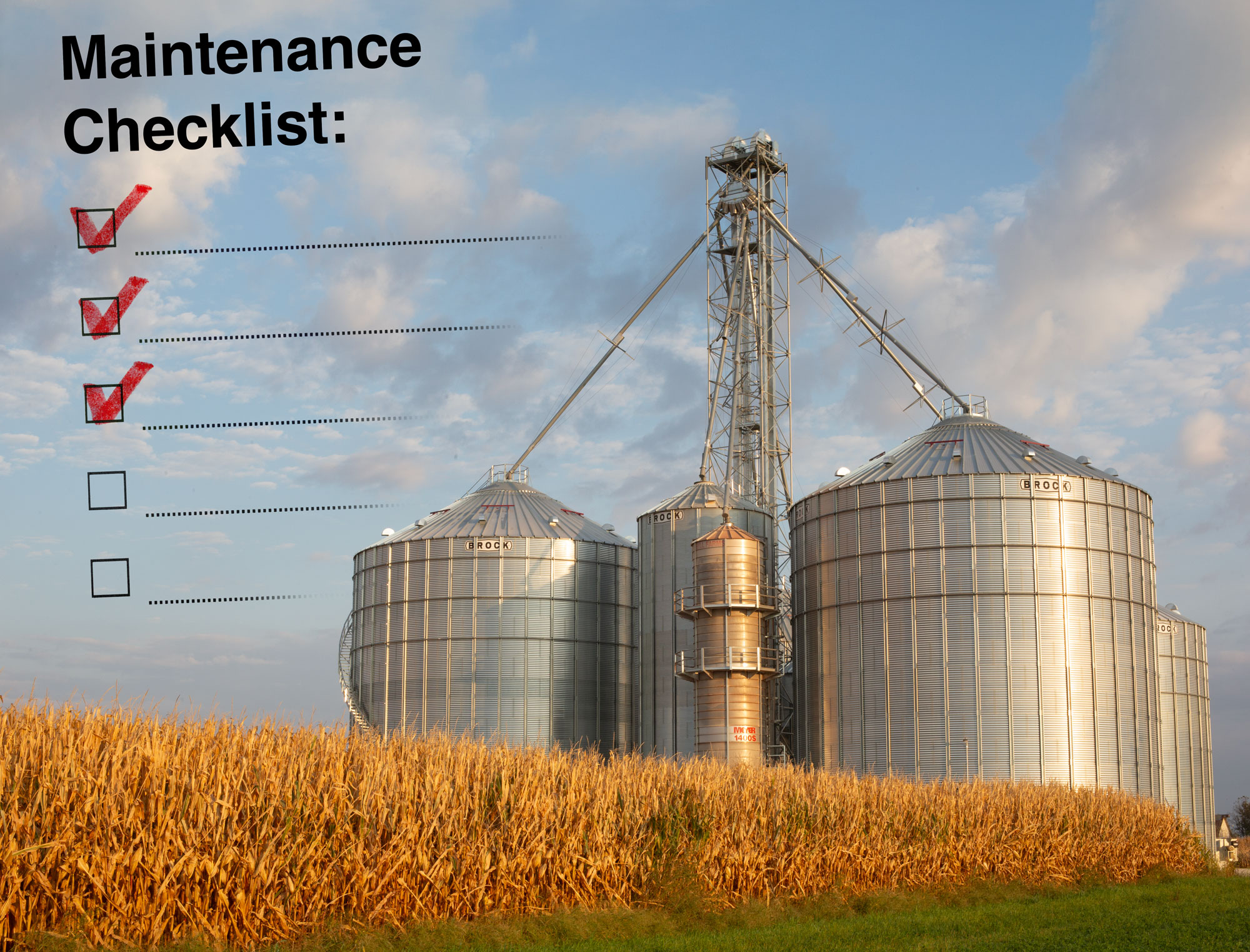
Before harvest season kicks into full gear, it’s essential to ensure your grain storage, handling, and drying equipment are ready. In this article, product experts from Brock Grain Systems share key tips to help you prepare for a smooth, efficient harvest and a worry-free storage season.
STORAGE EQUIPMENT MAINTENANCE TIPS
“Farmers should do a walk-around of their grain system to identify any issues that might turn into a larger problem down the road,” said Wuthrich.
Check inside and outside the bins.
“Do you see any rusty parts, missing bolts, or damage to bin accessories such as ladders and access points? Do you see cracking concrete in the foundation? Then moving inside the bin, you should visually observe the floor. Check it for level and make sure supports under the floor haven’t moved. It’s a good time to inspect the unload system, adjust belts, and grease any moving parts.”
Check ventilation and airflow.
“On the backside of the bins, check the fans and heaters. Make sure the electrical controls are in good shape and rodents haven’t chewed any wiring. We typically don’t recommend that you run the fans with the bins empty because, depending on what type of supports you have under the floor, that air movement can cause the floor supports to move. On bin roofs, inspect the air vents and make sure they don’t have bird nests in them. Plugged vents can cause problems down the road, especially during rain and freezing temperatures.”
Consider a dealer inspection.
“If you see anything out of the ordinary during any of these checks, especially with foundation movement, it is a good idea to have your Brock dealer perform a detailed inspection and make any necessary repairs.”
Other resources:
More information about bin inspection and maintenance is available in the Brock Grain Systems maintenance manual for grain bins. »

Dan Wuthrich, Product Manager of Storage Systems at Brock Grain Systems
HANDLING EQUIPMENT MAINTENANCE TIPS
“After your grain has been sent to market and your grain handling system is empty, there are three main areas to inspect before starting a new season,” said Ginder.
Clean out old grain to prevent rust.
“The biggest problem areas are the boot section in bucket elevators and the tail section in drag conveyors. Leftover grain gets wet in those spots and tends to cause rust. So, it’s really important to clean out those sections between seasons. If you do that, it’ll help the chain last longer and make the outer structure of the equipment last longer.”
Check chain and belt tensions.
“The number two area would be to check the chain tension in conveyors and belt tension in bucket elevators. The last thing you want to do during harvest is having to stop everything and take a link out of the chain, or re-splice the belt because you ran out of take-up. And then along with that, you’re looking for worn buckets on the elevator and replacing those, as well as any worn or broken flights on the drag conveyor.”
Maintain drive components.
“Lastly, you need to complete general maintenance on the drive components. Check for leaks on your reducer and make sure your oil level is okay. Check the reducer breather to make sure it is clean and free of debris. Also check the tension and condition of v-belts. V-belts should always be replaced with a matched set. These steps are in addition to the normal maintenance that you should be performing multiple times a year on your bearings.”
Other resources:
Belt tensioning and other procedures are covered in the Brock Grain Systems maintenance manual for handling equipment. »

Tyler Ginder, Product Manager of Handling Systems at Brock Grain Systems
DRYING & CONDITIONING EQUIPMENT MAINTENANCE TIPS
“As harvest season approaches, ensuring your grain dryer is fully operational can save you from costly downtime and service delays. Whether you’re handling maintenance yourself or relying on a dealer, here are some key pre-season steps that can make all the difference,” said Winchell.
Start with a clean burner.
“One of the most common pre-harvest calls dealers receive is, ‘My dryer burner won’t light.’ More often than not, the cause is a dirty burner. Over time, the small holes where gas exits the burner can become clogged with dirt, rust, or debris — especially the ones in the pilot light section. When maintaining a Brock Grain Systems dryer, use a 1/16-inch drill bit with a cordless drill to clean out each individual hole. Don’t rely on compressed air or a wire brush alone. This hands-on approach ensures gas can flow properly and the spark can ignite the burner efficiently.”
Don’t forget the fuel.
“Another surprisingly frequent issue is a lack of fuel flow — simply because the LP tank valve was never turned back on after last season.” Whether it was turned off by the farmer or the delivery driver during a refill, this easy-to-miss detail often leads to unnecessary troubleshooting. Before starting the dryer, double-check the fuel supply and verify that all valves are open.
Consider a professional inspection.
“My experience shows that farmers who schedule a dealer inspection before the drying season typically experience far fewer problems during harvest.” Technicians can identify weak components and address potential issues that might otherwise cause a breakdown during the busiest time of year — when dealer service teams are already stretched thin. A thorough pre-season inspection means fewer calls for emergency repairs and a smoother, more efficient harvest.
Expect the unexpected.
A final reminder: inspect your system thoroughly for any hidden surprises. It’s not unheard of for animals to crawl into the unload system during the off-season, causing major blockages when the dryer starts up. Winchell laughs, “You’ve never really lived until you had to clean a dead raccoon out of a grain dryer that crawled up inside the unload system.”
Other resources:
More information about dryer maintenance is available in the Brock Grain Systems maintenance manual for SQ Series Low-Profile grain dryers. »
Get more maintenance advice in this article: Pre-Season Grain Dryer Maintenance Checklist »

Bill Winchell, District Manager at Brock Grain Systems